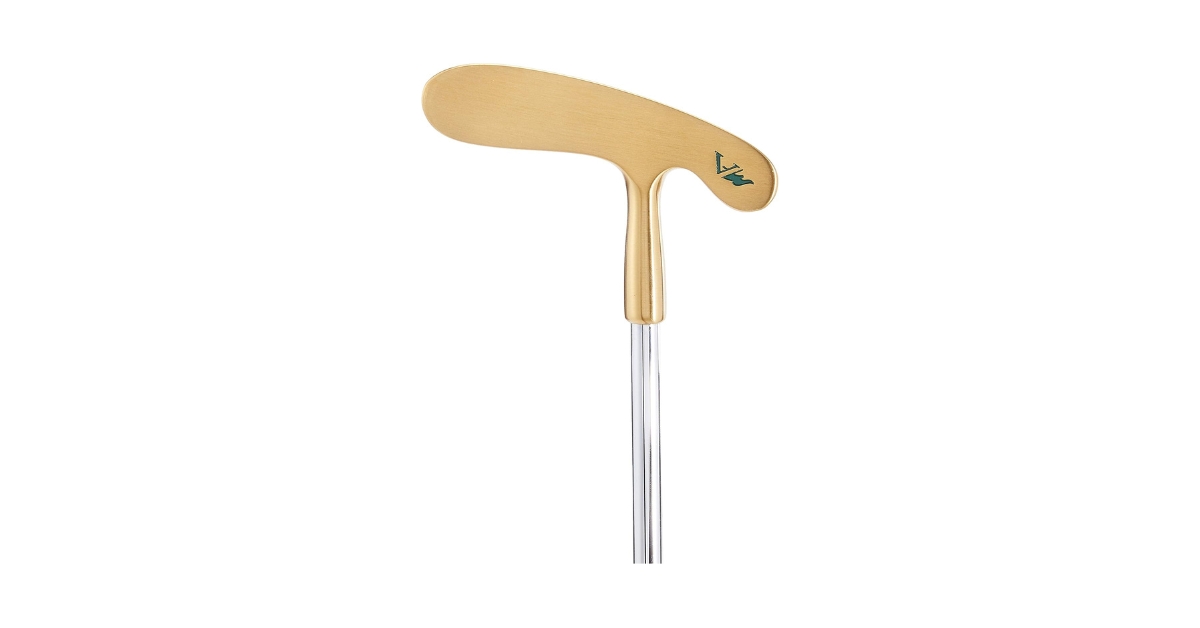
When golfers talk about classic putters, flashy multi-material mallets usually aren’t part of the conversation. Instead, it’s the simple blade designs that often come up, and the Wilson Augusta Putter is one of those clubs that has quietly stayed relevant for years. It doesn’t promise revolutionary technology or dozens of alignment aids. What it does promise is a traditional putting experience built around feel, simplicity, and consistency.
For golfers who appreciate an old-school look or simply want an affordable putter that performs above its price tag, the Augusta is surprisingly easy to recommend. It isn’t perfect, though, and that’s exactly why this review takes a balanced look at where it shines and where it falls a little short.
Whether you’re a beginner building your first bag or an experienced golfer looking for a nostalgic blade putter, this review should help you decide if the Wilson Augusta deserves a spot on your greens.
Wilson Augusta Putter at a Glance
| Specification | Details |
|---|---|
| Product Type | Traditional Blade Putter |
| Brand | Wilson |
| Model | Augusta (WGD8839) |
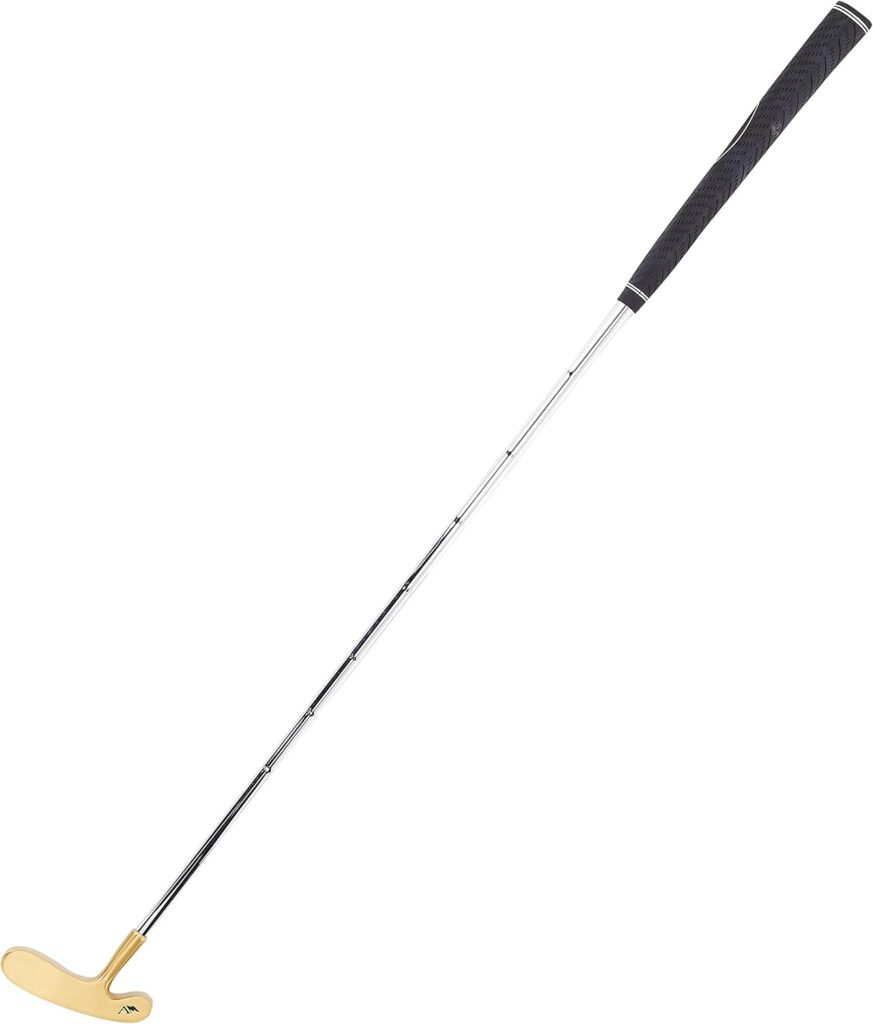
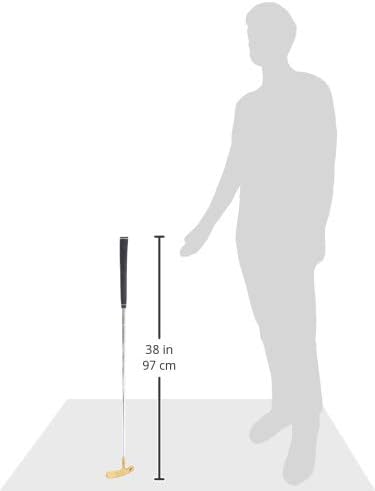
| Length | 35 Inches |
| Loft | 3° |
| Shaft | Steel |
| Grip | Oversized All-Weather Paddle Grip |
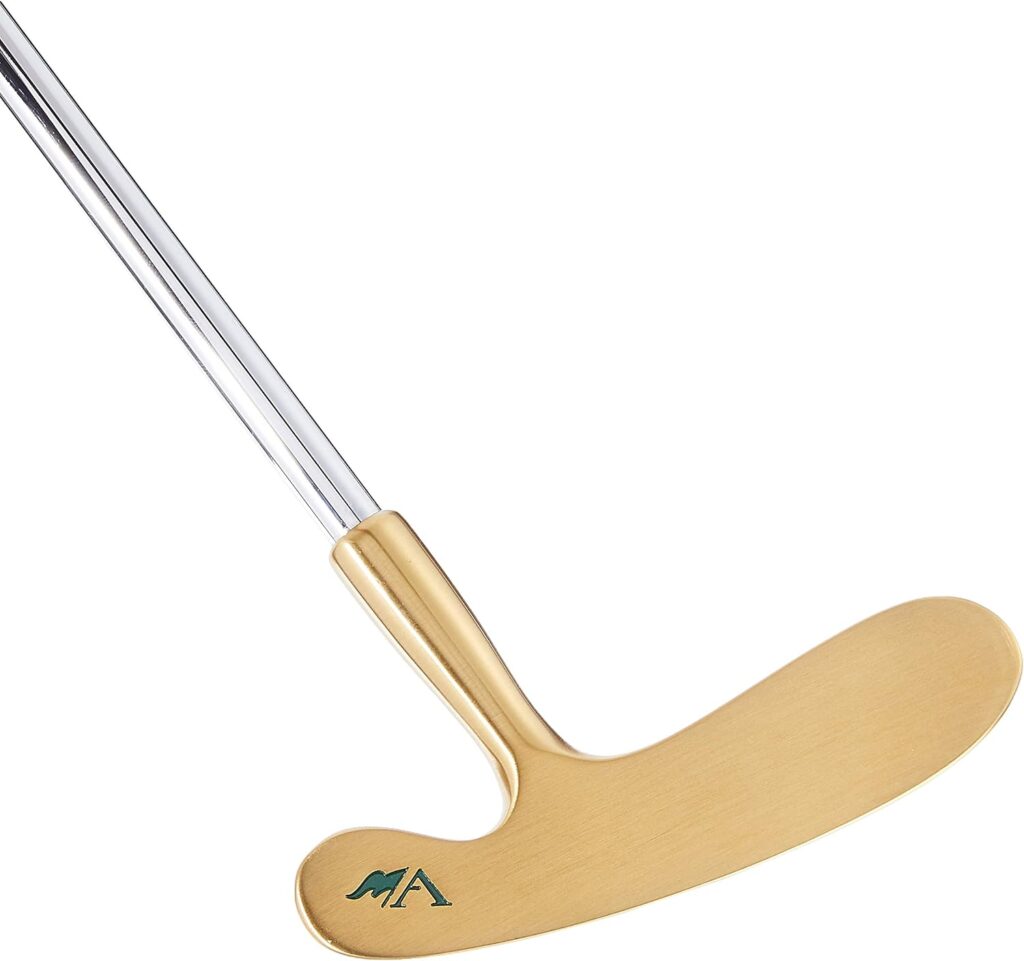
| Head Style | Brass-Finish Blade |
| Hand Orientation | Right-Hand Model (Blade design also usable from either side in many situations) |
| Best For | Beginners, traditional golfers, budget-conscious players |
View on Amazon
What Makes the Wilson Augusta Different?
The golf industry has spent the last decade making putters larger, heavier and packed with alignment technology. The Wilson Augusta goes in almost the opposite direction.
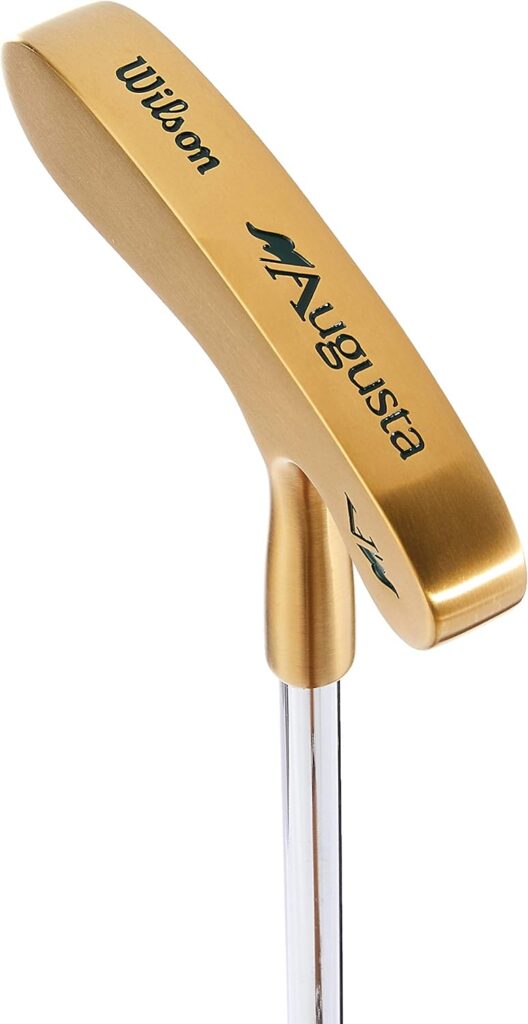
Its slim brass-colored blade immediately reminds many golfers of the famous Bullseye-style putters that dominated golf courses decades ago. There’s no oversized mallet, no futuristic wings and no complicated face inserts. Just a compact blade designed to let your stroke do the work.
Interestingly, this simplicity is exactly why many golfers continue buying it today. Several long-time players mentioned that switching back to the Augusta reminded them how natural putting can feel without depending on numerous visual aids. Instead of lining up with multiple markings, they found themselves focusing more on rhythm and pace.
That won’t suit everyone, of course. Golfers who rely heavily on alignment lines may need some adjustment time.
On-Green Performance
Distance Control
Distance control is where the Augusta pleasantly surprised many users.
The solid brass-style blade provides a crisp strike that delivers predictable roll once you become familiar with the sweet spot. The head has enough weight to create a smooth pendulum motion, yet it never feels overly heavy during shorter putts.
Several experienced golfers compared it directly with putters costing several times more. While they didn’t necessarily claim it outperformed premium models in every situation, many felt their overall distance control actually improved because the design encouraged a simpler putting stroke.
Long lag putts do require slightly more attention. Since this isn’t a high-MOI mallet, off-center strikes lose a bit more energy than modern oversized putters. After a few practice sessions, though, most golfers reported adapting without much difficulty.
Accuracy and Alignment
One thing becomes obvious the first time you set the Augusta behind the ball: there are no alignment lines.
For some golfers that’s refreshing. Others may initially find it intimidating.
Interestingly, customer experiences were divided in a positive way. Golfers who naturally align using the leading edge often loved the clean appearance, saying it actually reduced distractions. Players accustomed to modern alignment aids sometimes needed several rounds before feeling completely comfortable.
The center-shafted blade design also helps certain golfers square the face more naturally throughout the stroke, especially on shorter putts inside ten feet.
Feel Through Impact
This is probably the strongest selling point of the Augusta.
Impact feels firm, responsive and very direct. There’s very little between your hands and the golf ball, allowing immediate feedback after every stroke.
Good putts feel incredibly satisfying.
Poor strikes let you know instantly.
That kind of feedback isn’t a weakness—it actually helps many golfers improve because mishits are easy to identify during practice sessions.
Several verified buyers even described the Augusta as an excellent training putter because it doesn’t mask flaws in your stroke.
Forgiveness
Let’s be honest: forgiveness isn’t the Augusta’s biggest strength.
Compared with today’s large mallet putters, the smaller blade offers a narrower sweet spot. Mishits toward the heel or toe can lose noticeable speed, particularly on longer putts.
Beginners who struggle with consistent contact may find this challenging at first.
On the other hand, golfers wanting to sharpen their putting mechanics often appreciate this honest feedback because it encourages cleaner contact.
Design, Balance and Build Quality
Wilson kept the overall design refreshingly traditional.
The brass finish gives the head a classic appearance that stands out without looking flashy. Even golfers who own expensive putters often commented that the Augusta attracts compliments because it looks different from the oversized models dominating today’s market.
The steel shaft feels sturdy, while the slightly oversized paddle grip offers enough traction in both dry and damp conditions. Many owners specifically praised the grip for remaining comfortable throughout an entire round without becoming slippery.
Balance is another pleasant surprise. Despite its affordable price, the head feels well distributed throughout the stroke, creating a smooth rhythm that many golfers found surprisingly confidence inspiring.
Build quality, overall, receives strong marks from most buyers. The majority described the club as solid and well assembled, especially considering its price category.
There were, however, a handful of quality-control complaints. A small number of customers received clubs with grips installed slightly crooked or heads that weren’t perfectly square. While these reports represent a minority compared to the large number of positive reviews, they’re worth mentioning because consistency matters in putting equipment.
Who Will Enjoy the Wilson Augusta?
The Augusta isn’t designed for every golfer, but it fits certain players remarkably well.
Beginners looking for an affordable first putter will appreciate its straightforward design and reasonable price. Rather than relying on complicated technology, it teaches the importance of developing a repeatable putting stroke.
Golfers who enjoy traditional equipment will probably love everything about it. The compact blade, clean topline and classic styling create a nostalgic experience that many players genuinely enjoy every time they step onto the green.
It’s also an excellent choice for golfers who believe putting should be about feel rather than technology. If you naturally trust your instincts more than alignment graphics, the Augusta feels refreshingly uncomplicated.
However, golfers searching for maximum forgiveness or extensive alignment assistance may be happier with a modern mallet putter. Likewise, anyone who consistently misses the center of the face may benefit from a higher-MOI design that offers more stability on mishits.
Real Customer Feedback Summary
One of the reasons the Wilson Augusta has remained popular for years is that golfers from very different skill levels tend to agree on the things it does well. Looking through hundreds of verified buyer reviews, a few clear patterns start to appear.
What Golfers Loved
The biggest compliment was value for money. Quite a few buyers admitted they weren’t expecting much because of the affordable price. Some even purchased it simply for nostalgia or as a backup putter. After spending time on the practice green, however, many were genuinely surprised by how solid it felt.
Another common theme was the classic blade design. Golfers who grew up playing traditional Bullseye-style putters appreciated the simple appearance. Instead of distracting alignment graphics or oversized heads, the Augusta lets players focus on making a smooth stroke. Several reviewers even mentioned that they started making more putts after switching from expensive modern putters because the Augusta encouraged them to trust their natural putting motion.
The head weight also received consistent praise. Golfers described it as balanced without feeling bulky, making it easier to control during short and medium-length putts. The oversized paddle grip was another pleasant surprise, offering a secure feel even during humid rounds.
A number of experienced golfers compared it with putters costing well over $200. While nobody claimed it was identical to premium tour-level models, several buyers felt it performed every bit as well for their personal putting style. That’s probably one of the strongest compliments an affordable putter can receive.
Many golfers also liked its versatility around the course. Since the blade design can be used from either side in certain recovery situations, some found it handy when their ball finished close to trees or awkward lies where a normal stance wasn’t possible.
Common Complaints
No product is perfect, and the Augusta certainly has a few drawbacks.
The most repeated criticism involved the lack of alignment aids. Golfers who rely on bold sight lines or alignment dots sometimes struggled during their first few rounds. The clean blade looks beautiful, but it demands more confidence from the player.
Another frequent observation was the smaller sweet spot. Compared with modern mallet putters, mishits lose more energy and direction. Beginners who haven’t yet developed consistent contact may notice this more than experienced golfers.
A small number of buyers also mentioned quality control issues. Some received grips that weren’t perfectly straight, while others felt the grip installation wasn’t as clean as expected. These reports represented a relatively small percentage of overall reviews, but they’re still worth considering.
Finally, golfers looking for maximum forgiveness or cutting-edge technology generally felt the Augusta was too traditional for their preferences.
Our Overall Performance Assessment
Although the Wilson Augusta doesn’t include modern face inserts, adjustable weighting or elaborate alignment systems, that’s honestly part of its charm.
On the practice green, it rewards a smooth tempo and centered contact. The putter provides immediate feedback, allowing golfers to quickly recognize whether a stroke was solid or slightly off-center. Rather than masking mistakes, it helps identify them, which is one reason many players even use it as a practice aid to improve their stroke.
Inside ten feet, the Augusta feels particularly comfortable. Its compact blade inspires confidence for golfers who naturally prefer traditional shapes. Medium-range putts also feel predictable once you’ve learned how the head releases through impact.
Long lag putts require slightly more concentration because the smaller head offers less forgiveness than high-MOI mallets. That’s not necessarily a flaw—it simply reflects the design philosophy behind a classic blade putter.
If your putting style already favors feel over technology, chances are you’ll adapt quickly.
Wilson Augusta vs Similar Budget Putters
| Model | Best For | Main Advantage |
|---|---|---|
| Wilson Augusta | Traditional golfers | Classic blade feel and outstanding value |
| Wilson Harmonized M5 | Beginners | Larger alignment aid and slightly more forgiveness |
| Pinemeadow PGX | Golfers wanting stability | Mallet-style design with higher MOI |
The Augusta clearly targets golfers who appreciate simplicity. If you enjoy the traditional appearance of older Wilson or Bullseye-style putters, it remains one of the better budget choices available.
However, if you struggle with alignment or consistently miss the center of the face, a modern mallet such as the Pinemeadow PGX or Wilson Harmonized M5 may inspire more confidence.
Check Here
Is the Wilson Augusta Worth the Money?
This is where the Augusta really earns its reputation.
Considering its affordable price, it’s difficult to find many putters that offer the same combination of classic styling, solid construction and dependable feel. While it lacks the latest technology found in premium models, most recreational golfers simply don’t need those extra features to hole more putts.
Several long-time golfers even admitted they had replaced significantly more expensive putters after discovering how comfortable they felt with the Augusta.
If your priorities are feel, consistency and traditional design rather than marketing buzzwords, the value is genuinely excellent.
Pros and Cons
Pros
- Outstanding value for the price
- Classic blade design with timeless appearance
- Solid head weight and balanced feel
- Comfortable oversized all-weather grip
- Responsive feedback at impact
- Suitable for practice and regular play
- Simple design helps develop better putting fundamentals
Cons
- No alignment lines or visual aids
- Less forgiving than modern mallet putters
- Smaller sweet spot requires centered contact
- Minor grip installation issues reported by a few buyers
- Not ideal for golfers seeking maximum forgiveness
Golf Assay Score
| Category | Rating |
|---|---|
| Feel | 9.2 / 10 |
| Distance Control | 8.8 / 10 |
| Forgiveness | 7.5 / 10 |
| Build Quality | 8.7 / 10 |
| Design | 9.1 / 10 |
| Value for Money | 9.7 / 10 |
| Overall Score | 9.0 / 10 |
Final Verdict
The Wilson Augusta Putter proves that great putting doesn’t always require expensive technology. Sometimes a well-balanced blade, a comfortable grip and a predictable feel are all you really need.
It won’t replace every premium putter on the market, and golfers who depend on large alignment features or maximum forgiveness may find modern mallets easier to use. But for players who appreciate traditional golf equipment, or anyone wanting an affordable blade that performs well beyond its price, the Augusta remains a surprisingly compelling option.
What stands out most isn’t just its low cost—it’s the number of golfers who bought it with modest expectations and ended up keeping it in the bag for years. That’s something you don’t often see with budget golf equipment.
If you’re searching for a classic blade putter that emphasizes feel, encourages a confident stroke and delivers remarkable value, the Wilson Augusta deserves serious consideration.